


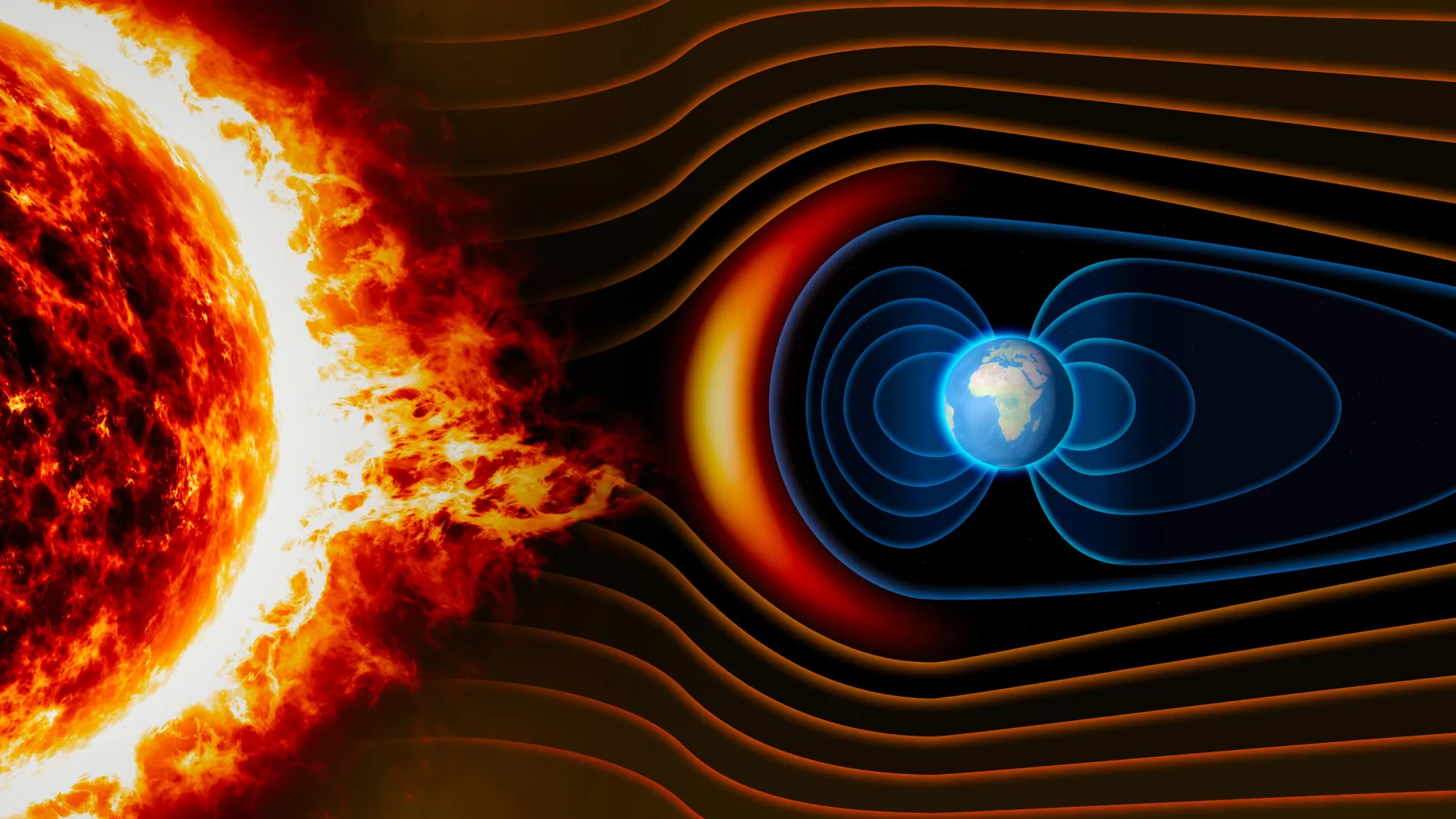
Earth’s Magnetic Field Went Wild 600 Million Years Ago and Scientists Finally Know Why
Earth’s magnetic field went wild 600 million years ago and scientists finally know why. During the Ediacaran Period, Earth’s magnetic behavior was markedly erratic compared to previous geological eras. This unpredictability has long puzzled researchers, as it deviated from the norm where tectonic plates moved steadily and climate conditions remained relatively stable.
Table of Contents
- Overview
- Main Facts
- Details
Overview
The Ediacaran Period, spanning from approximately 630 to 540 million years ago, is recognized for its complex geological phenomena. Unlike other times in Earth’s history, where magnetic signals exhibited consistent patterns, the rocks from this era show dramatic fluctuations. This variability poses challenges for scientists trying to piece together historical continental arrangements through a method known as paleomagnetism.
Main Facts
Here are some key insights regarding Earth’s magnetic field during this time:
- The magnetic signals from the Ediacaran rocks are exceptionally irregular.
- Researchers propose several theories—either tectonic plate motion was unusually rapid, or a phenomenon known as “true polar wander” occurred.
- A new study led by Yale University suggests a more structured approach to analyzing these patterns.
Details
Investigations into this magnetic chaos have revealed several insights. Yale researchers, led by David Evans, have developed a new statistical model that provides a clearer understanding of the relationship between magnetic variability and geological events. Their study indicates that contrary to earlier assumptions, the changes in Earth’s magnetic field may have adhered to a discernable pattern rather than being random. This perspective is poised to help reconstruct the geography of the Ediacaran world with much greater precision.
Key highlights from their findings include:
- Data collected from the Anti-Atlas region of Morocco yielded critical insights.
- High-resolution paleomagnetic analysis revealed the speed at which Earth’s magnetic poles shifted.
- Findings suggest that these shifts occurred over thousands of years, rather than the previously assumed millions.
Understanding the New Approach
Utilizing advanced analytical tools, the study demonstrated that assumptions regarding the behavior of the magnetic field in the past needed reevaluation. By sampling rocks layer by layer and establishing precise timelines, researchers have debunked prior explanations involving rapid tectonic movements or global axis shifts. The findings signify a deliberate restructuring of knowledge about magnetic dynamics during the Ediacaran, allowing for a more coherent visualization of Earth’s geological timeline.
The Importance of This Research
David Evans emphasized the significance of these findings: “This robust methodology paves the way for a more comprehensive understanding of Earth’s geological history, from ancient times to the present.” As part of the study, contributions from various institutions—including Dartmouth College—reinforced the validity of these new insights.
Future research will not only illuminate the mysterious behavior of Earth’s magnetic field but also bridge the knowledge gap between older geological periods and contemporary understanding.
Frequently Asked Questions
What does it mean that Earth’s magnetic field went wild 600 million years ago?
Earth’s magnetic field went wild 600 million years ago, indicating significant geological and tectonic activity, challenging previous understandings of Earth’s stability.
How did scientists measure the magnetic field changes during the Ediacaran?
Researchers measured the fluctuations by analyzing rock samples from the Ediacaran, revealing structured patterns underlying the chaotic magnetic signals.
Why is this study important for understanding Earth’s history?
Understanding why Earth’s magnetic field went wild 600 million years ago helps reconstruct past continental configurations, shedding light on Earth’s geological history.