


The Role of the ESB2 Protein in African Trypanosome Immune Evasion
Meta Description
Discover how the ESB2 protein enables the African trypanosome parasite to modify its protective layer, enhancing its immune evasion and paving the way for improved treatments for Sleeping Sickness.
URL Slug
esb2-protein-african-trypanosome-immune-evasion
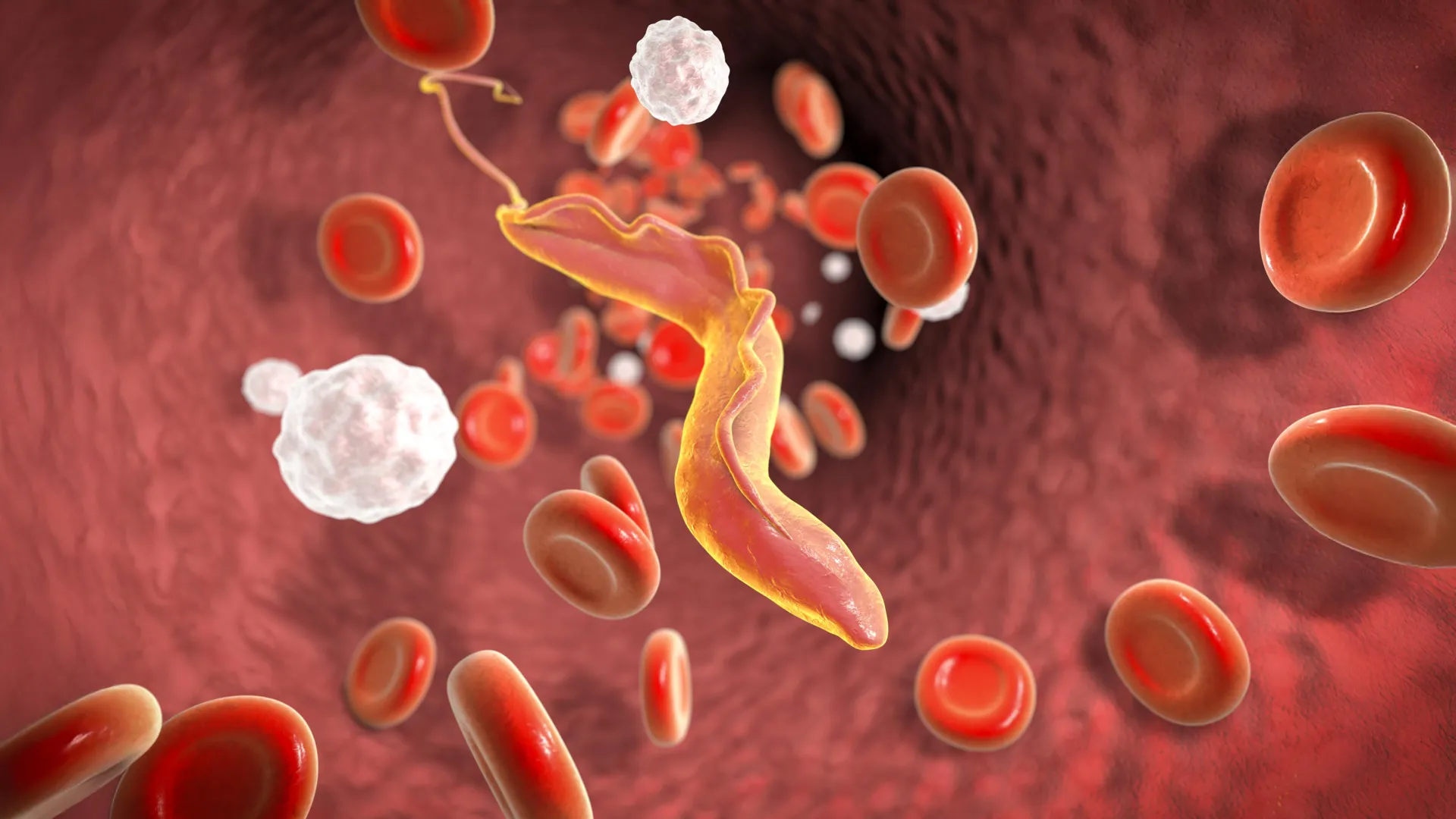
To survive inside the human bloodstream, the African trypanosome parasite relies on a sophisticated mechanism involving variant surface glycoproteins (VSG), which act as its protective layer. A recent study published in Nature Microbiology has shed light on a crucial protein, known as ESB2, that allows the parasite to maintain precise control over this “cloak” while evading the host’s immune responses.
Unraveling the Mystery of Immune Evasion
Researchers have identified the ESB2 protein as a key player in the parasite’s survival strategy. This protein functions as a “molecular shredder,” capable of selectively truncating its genetic instructions during production. Understanding this intricate mechanism opens new avenues for treatment options against Sleeping Sickness, a disease that heavily affects socio-economic conditions in sub-Saharan Africa.
The Mechanism Behind Sleeping Sickness
Sleeping Sickness, transmitted through the bite of an infected tsetse fly, can lead to severe symptoms if left untreated, including disruptions in sleep, cognitive confusion, and even coma. The role of the ESB2 protein in this context becomes even more significant, as it underlines how the parasite successfully escapes detection and eradication by the host’s immune system.
How ESB2 Works: A “Molecular Shredder”
Dr. Joana Faria, the senior author of the study and head of the research group at the University of York, explained: “Our groundbreaking research reveals that the parasite’s secret to remaining undetected lies not only in its ability to produce proteins but also in how it strategically destroys certain genetic instructions. By incorporating a ‘molecular shredder’ directly within its ‘protein factory,’ the parasite achieves real-time editing of its genetic manual.”
A Revolutionary Perspective on Infection
This research challenges traditional views of pathogen survival. Dr. Faria notes, “The findings indicate that survival for many organisms might hinge less on how they create genetic outputs and more on how they manage to eliminate those instructions right from the source.”
Solving a Long-Standing Puzzle in Gene Expression
The discovery of ESB2 also addresses a long-standing enigma in the biology of the African trypanosome. Scientists have long been puzzled by the parasite’s ability to produce a disproportionate amount of VSG proteins compared to its helper genes, which facilitate immune evasion.
The Breakthrough Findings
Instead of producing equal quantities of each protein, the parasite generates an abundance of VSG proteins while limiting the production of helper proteins. This study reveals that such an imbalance is not coincidental; rather, it is a carefully orchestrated strategy dictated by ESB2. The protein destroys certain genetic instructions while ensuring that the necessary components for survival remain intact.
ESB2: Precision Control Inside the Expression Site Body
The protein ESB2 operates within the Expression Site Body of the parasite, a vital center for protein production. As the genetic instructions undergo processing, ESB2 acts like a “molecular blade,” swiftly truncating sections related to helper genes while preserving those linked to the protective cloak.
Maintaining Undetectability
This precise real-time editing is essential for the African trypanosome, allowing it to produce exactly what it requires to elude detection by the host’s immune system. The implications for potential therapeutic interventions are immense, as targeting this mechanism could disrupt the parasite’s camouflage, rendering it vulnerable to treatment.
A Significant Contribution from the University of York
The study marks a considerable breakthrough from Dr. Faria’s new laboratory at the University of York, further solidifying the city’s reputation as a hub for life sciences research. Funded by a prestigious Sir Henry Dale Fellowship—a collaboration between the Wellcome Trust and the Royal Society—the research embodies a global effort, bringing together experts from the United Kingdom, Portugal, the Netherlands, Germany, Singapore, and Brazil.
Reaction and Future Perspectives
Lianne Lansink, the first author of the study, expressed excitement about the find, stating, “When we observed the molecular shredder localized in the microscope, we instantly recognized its significance.” Dr. Faria further emphasized, “This moment represents a culmination of years of inquiry into how this parasite regulates its genetic expression asymmetrically. It’s immensely fulfilling to finally decipher this mystery as the inaugural achievement from my lab.”
Conclusion
The role of the ESB2 protein in the African trypanosome’s immune evasion is a groundbreaking revelation that not only enhances our understanding of parasite biology but also holds promise for developing innovative treatments for Sleeping Sickness. By continuing to delve into these molecular mechanisms, scientists can uncover possible weak points in the parasite’s lifecycle, ultimately contributing to improved healthcare solutions for those affected in sub-Saharan Africa.