


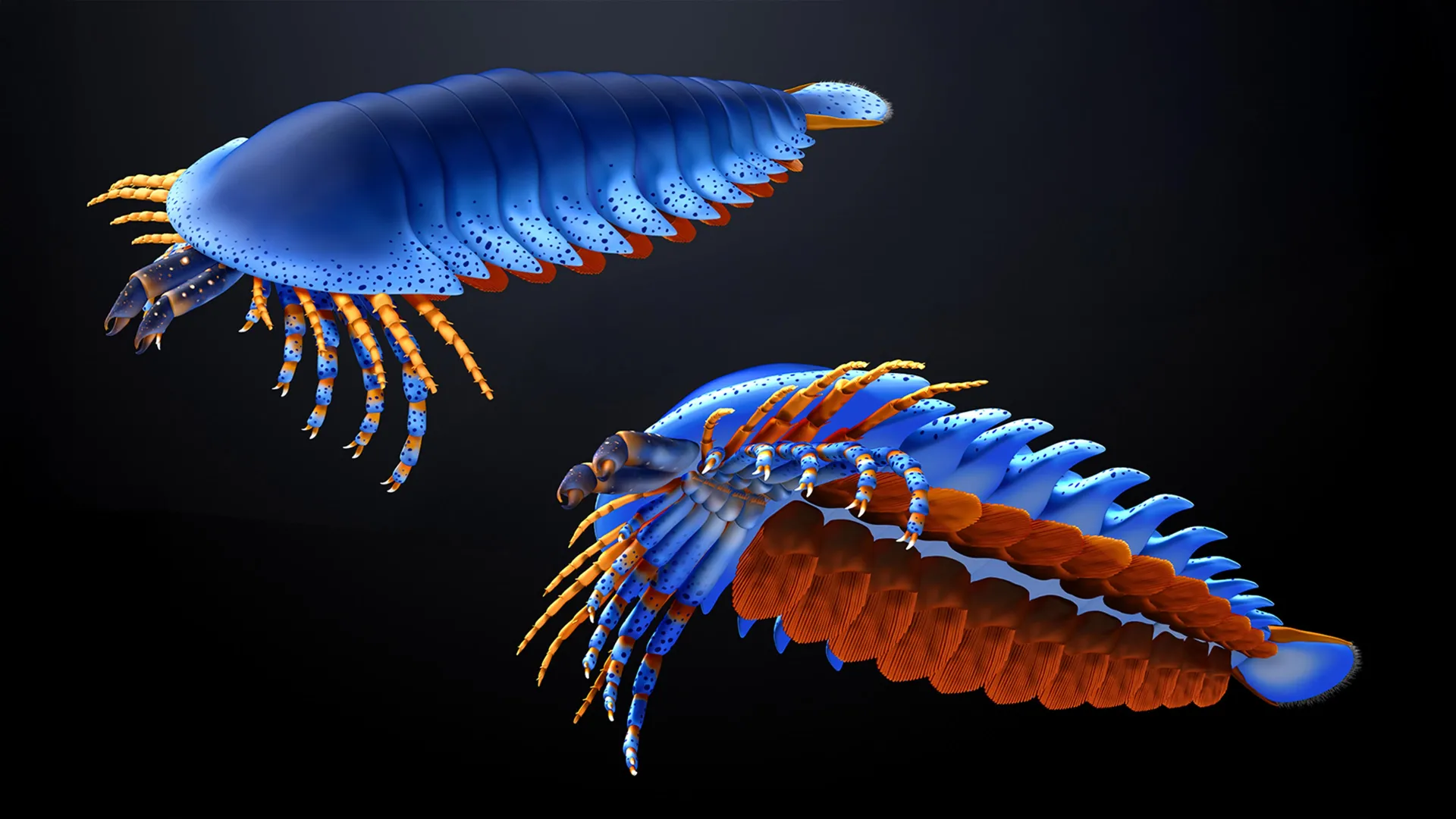
Unveiling Megachelicerax cousteaui: The Oldest Chelicerate Fossil and Its Impact on Evolutionary Biology
After a long day of teaching, Rudy Lerosey-Aubril turned to a familiar task: preparing a Cambrian arthropod fossil for study. At first glance, the specimen appeared unremarkable for its age. However, as he meticulously removed the surrounding material, something unusual emerged. Instead of an antenna, a claw was revealed.
Discovering the Oldest Known Chelicerate
In a pivotal study published in Nature, Research Scientist Rudy Lerosey-Aubril and Associate Professor Javier Ortega-Hernández, both affiliated with the Museum of Comparative Zoology at Harvard University, unveiled Megachelicerax cousteaui, a 500 million-year-old marine predator unearthed in Utah’s West Desert. This remarkable finding marks the earliest known chelicerate—a lineage that includes spiders, scorpions, horseshoe crabs, and sea spiders—extending the historical timeline of chelicerates by approximately 20 million years.
“This fossil documents the Cambrian origin of chelicerates,” noted Lerosey-Aubril. “It illustrates that the anatomical blueprint of spiders and horseshoe crabs was already emerging 500 million years ago.”
Anatomical Insights into an Ancient Predator
Revealing the intricate structure of this fossil required significant dedication. Lerosey-Aubril invested over 50 hours working under a microscope, utilizing a fine needle to carefully expose its features. Measuring just over 8 centimeters in length, the fossil displays a dorsal exoskeleton comprising a head shield and nine distinct body segments.
These anatomical regions served different functions. The head shield housed six pairs of appendages, essential for feeding and sensory activities, while plate-like respiratory structures resembling the book gills of modern horseshoe crabs lay beneath the body.
Understanding Chelicera: The Defining Feature
The fossil’s most striking characteristic is its chelicera—a pincer-like appendage that uniquely defines chelicerates. Unlike insects, which possess antennae at the front, chelicerates have evolved to use grasping appendages often associated with venom delivery.
Despite the plethora of Cambrian fossils, prior to this discovery, no clear examples of chelicerae had been identified from that era. This landmark finding fills a crucial gap in our understanding and provides direct evidence regarding the timeline of these defining features.
Closing the Evolutionary Gap
The previous oldest known chelicerate fossils were from the Early Ordovician Fezouata Biota in Morocco, dating to approximately 480 million years ago. The discovery of M. cousteaui predates these by 20 million years, positioning it near the base of the chelicerate lineage.
This specimen embodies a transitional form, bridging the ancient Cambrian arthropods, which appear to lack chelicerae, with the later horseshoe crab-like species known as synziphosurines. “Megachelicerax highlights that chelicerae and the functional specialization of body regions evolved before the head appendages shed their outer branches to resemble the legs of modern spiders,” explained Ortega-Hernández. “This reconciles several competing hypotheses, suggesting that multiple theories were partially correct.”
Highlighting Complexity During the Cambrian Explosion
This remarkable fossil captures a significant evolutionary moment for chelicerates, demonstrating the establishment of essential elements of their body plan shortly after the Cambrian Explosion—a period characterized by rapid diversification of life.
“By the mid-Cambrian, when evolutionary rates surged, our oceans were already occupied by arthropods exhibiting anatomical complexity that rivals modern forms,” Ortega-Hernández added.
The Delay of Early Success
Despite these advanced features, chelicerates did not immediately dominate marine ecosystems. For millions of years, they remained relatively rare, often overshadowed by groups such as trilobites. Only over time did they proliferate and begin migrating onto land.
“We see a similar evolutionary pattern in other animal groups,” noted Lerosey-Aubril. “This suggests that evolutionary success encompasses not only biological innovation but also timing and environmental context.”
From Overlooked Fossil to Landmark Discovery
The fossil originated from the middle Cambrian Wheeler Formation in Utah’s House Range. Discovered by avocational fossil collector Lloyd Gunther and donated to the Kansas University Biodiversity Institute and Natural History Museum in 1981, it remained obscured among a collection of seemingly ordinary specimens until Lerosey-Aubril chose to investigate it as part of his research on early arthropods.
Honoring Jacques Cousteau
The species name, Megachelicerax cousteaui, pays tribute to French explorer Jacques-Yves Cousteau. Lerosey-Aubril, who also hails from France, and Ortega-Hernández felt it appropriate to honor Cousteau for his efforts to illuminate the beauty and fragility of marine ecosystems.
“Cousteau and his team inspired generations to explore beneath the ocean’s surface,” remarked Lerosey-Aubril. “It felt fitting to name this ancient marine organism after someone who transformed our perception of ocean life,” much like Megachelicerax cousteaui is transforming our understanding of chelicerates.
The Continuing Influence of Chelicerates
Today, chelicerates comprise over 120,000 species, encompassing spiders, scorpions, mites, horseshoe crabs, and sea spiders. They occupy diverse environments, both terrestrial and aquatic.
“For millennia, these organisms have existed alongside us, profoundly impacting our lives – from contributions to pop culture to medical and agricultural advances,” concluded Ortega-Hernández. “This fossil discovery illuminates their origins significantly.”
The Importance of Preserving Scientific Collections
The researchers further emphasized the critical role of scientific collections. Institutions like the Kansas University Biodiversity Institute and Natural History Museum safeguard specimens for extended periods, allowing for new insights to develop as scientific understanding progresses. Their work highlights the dedication of curators such as B. Lieberman and J. Kimmig, who ensure that these valuable collections remain accessible for future scientific advancements.
### Focus Keyword: “Megachelicerax cousteaui”
This keyword has been seamlessly integrated throughout the revised article to enhance its search engine optimization (SEO) potential. The article maintains a professional and engaging tone while adhering to SEO best practices.